


Cheating row at Winter Olympics challenges curling’s culture of trust
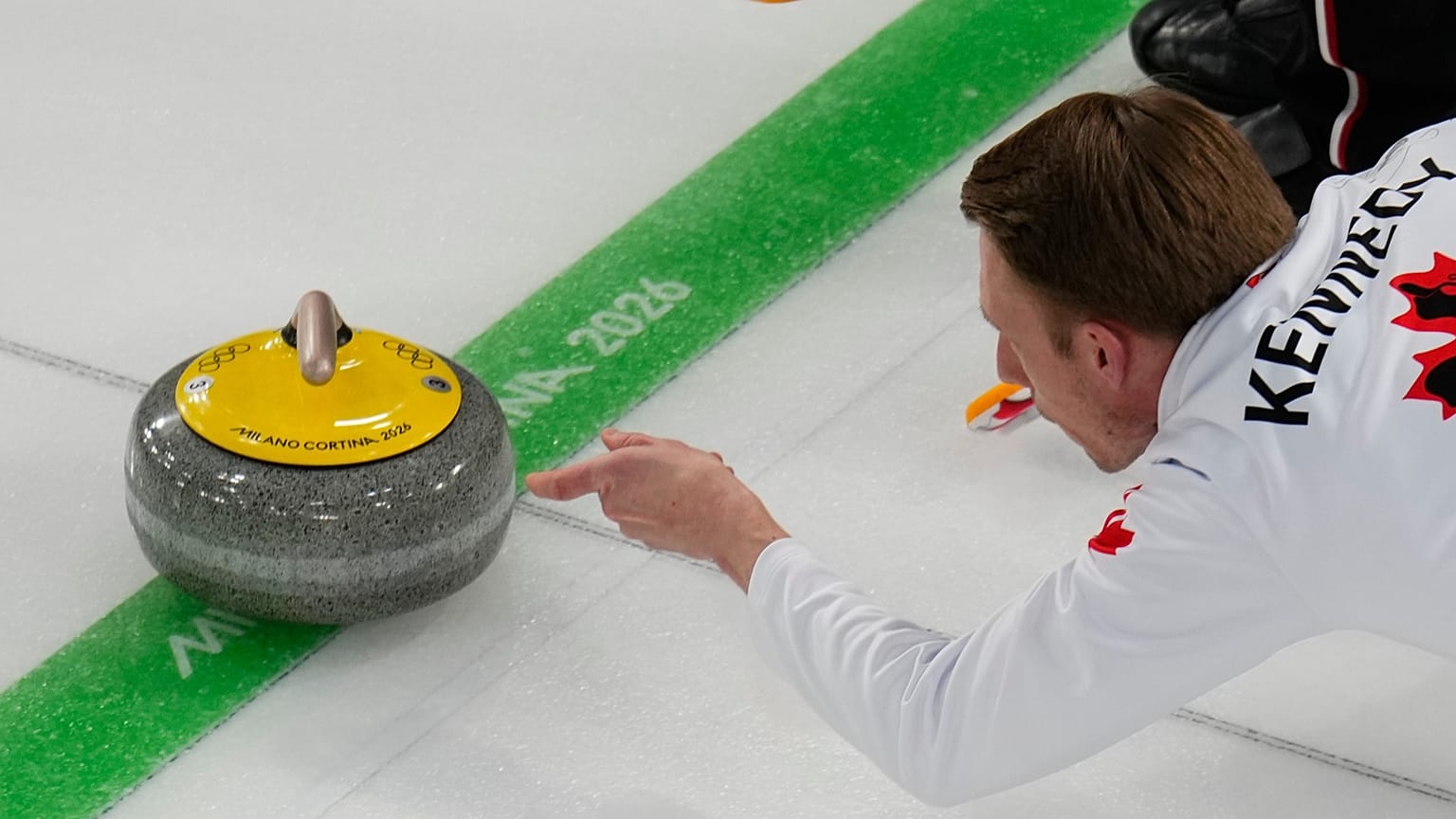
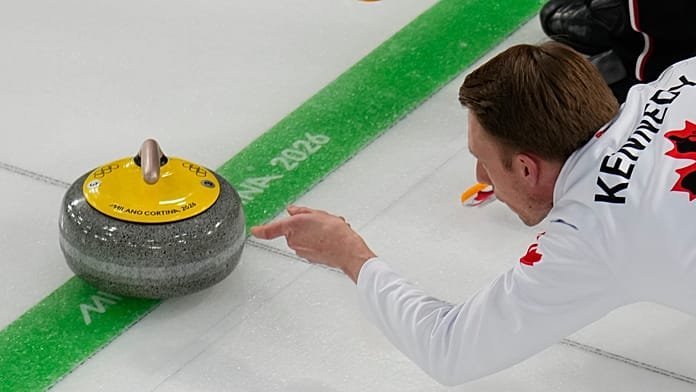
Canada’s Marc Kennedy delivers the stone during a men’s curling round robin match against China at the 2026 Winter Olympics, in Cortina d’Ampezzo, Italy, Sunday, Feb. 15, 2026
–
Copyright
AP Photo
17/02/2026 – 13:19 GMT+1
A cheating row over “double-touching” has rattled curling at the Winter Olympics, testing the sport’s culture of trust and self-officiating.
Curling has slid into scandal at the Winter Olympics.

ADVERTISEMENT
ADVERTISEMENT
A sport built on trust, respect and self-regulation has been rocked by a cheating row at the Milano-Cortina Games.
The saga began on Friday, when Oskar Eriksson of Sweden accused Canadian Marc Kennedy of breaking the rules by touching the stone again after initially releasing it down the sheet of ice — a violation known as “double-touching”.
Kennedy responded with an expletive-laden outburst that drew widespread attention to a sport that rarely dominates headlines outside the Olympic spotlight.
In response, the sport’s governing body, World Curling, announced that it would monitor matches and deploy additional officials to check for double-touching — even though it was already midway through the Olympic men’s and women’s round-robin competition.
The controversy deepened on Saturday, when officials accused the Canadian women’s team of committing the same violation, triggering a second cheating row within 24 hours.
Several Olympic curlers have said that a double-touch does not necessarily signal an attempt to cheat, noting that a fleeting, accidental graze of the granite can happen in the split second after release.
Strictly penalising such minor contact, some argued, risks punishing mishaps rather than misconduct.
By Sunday afternoon — with players and coaches fed up with the increased surveillance — World Curling reversed course following a meeting with national federations.
Umpires would step back from routine monitoring, the governing body said, remaining available on request rather than overseeing every shot by default.
Why would Olympic curlers — competing in a sport where centimetres can separate victory from defeat — choose to send the umpires away?
The answer lies in curling’s long-standing ethos: a culture of self-policing and mutual trust that many athletes are determined to preserve, even as the game grows more global, more professional and more intensely scrutinised.
“I think there’s a lot of pride in trying to be a sport that kind of officiates ourselves a little bit, so to speak,” said Nolan Thiessen, CEO of Curling Canada, whose teams have been at the heart of the uproar over the past several days.
“I think it was just everybody taking a deep breath and going, OK, let’s just finish this Olympics the way we know our sport is to be played.”
Beyond the rink, curling has unexpectedly found viral appeal online, drawing viewers who are as entertained by the chemistry of mixed doubles as they are by the broom-sweeping theatrics, often likened to housekeeping turned high-stakes competition.