


Artificial intelligence
Access to electricity in Africa was a central topic at the recent World Governments Summit in Dubai. While hundreds of millions of Africans still lack power, new solutions are emerging, particularly in the form of solar-powered micro-grids.
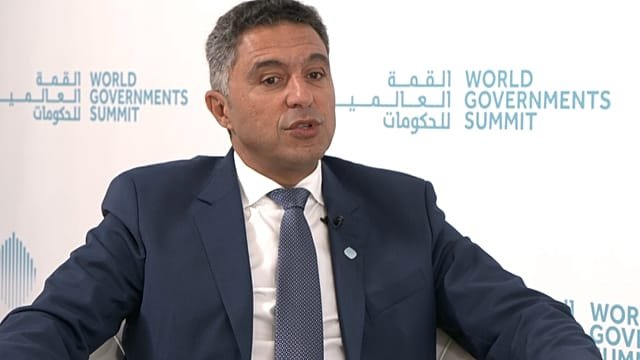
Africanews spoke with Walid Sheta, President for Africa and the Middle East at Schneider Electric, about how these systems could reshape the continent’s energy landscape.
“Interconnected grids alone will not solve it”
“The solution will not come solely through interconnected networks as they exist in Europe,” Sheta explains. “Why? Africa is a vast continent, with many territories and countries spread over large distances. Building and operating a single, unified grid is far more complex.
“That’s why what we now call mini-grids and micro-grids, particularly those using solar energy, are emerging. We believe these relatively small networks will solve the energy dilemma, centred around towns or villages. They are based primarily on solar, but not only on solar, and they can deliver what is called a micro-grid of electrical energy to individuals across African territory.”
Whatever the energy source, he insists, “there is always a problem of access to that energy.”
An ecosystem, not just technology
For Sheta, technology alone is not enough. “We believe that a complete ecosystem is needed – not only investors, but also appropriate regulation and access to financing. Many donors support these electrification projects. The real challenge is to bring together people, businesses and governments to electrify every village with an appropriate solution.”
Where are micro-grids taking off?
According to Sheta, some of the most dynamic markets are in West and East Africa. “There is really a boom in micro-grids in Nigeria and Kenya, but also in many countries in Central Africa. We see this evolution towards micro-grid networks.”
And the model is not limited to rural or remote areas.
“This is not only for isolated villages,” he notes. “Hotels, offices or industrial zones can also benefit, especially in areas where the national grid is unstable. In those cases, it is often easier to connect to a solar source.”
Managing multiple energy inputs is becoming a key skill. “You need to manage the duality of the electrical source,” Sheta says, referring to the combination of grid power and on-site generation. “Many initiatives and many companies are entering this exciting new industry.”
You may also like
Most read