


10:02
At the Mixblik food factory, women from around the world combine their passion for cooking with lessons in sales, administration, food industry standards and the Dutch language.
It is a cold and grey day in Rotterdam, a stark contrast to the warm atmosphere inside the Mixblik food factory, where a community of women new to life in the Netherlands cook, laugh and learn together.

ADVERTISEMENT
ADVERTISEMENT
Mixblik — “blik” meaning “tin can” in English — is a social enterprise focused on sustainability and empowering women with low literacy rates who recently moved to the Netherlands.
The women come to the factory three times a week, where they combine their passion for cooking with lessons in sales, administration, food industry standards and the Dutch language.
Many of the women at Mixblik “did not come to the Netherlands for fun,” co-founder Esther van der Hoeven told Euronews, emphasising how challenging it can be for them to leave their communities behind and start again in a new country.
“It’s very difficult when arriving to Europe, and to the Netherlands, to participate in society. So we teach the women Dutch courses, but also things that you need to know about the Dutch working culture,” van der Hoeven said.
Currently, 24 women are enrolled in Mixblik’s educational programme and some women who first started there have since progressed to permanent positions at the company.
The enterprise works closely with the municipality of Rotterdam and the surrounding regions.
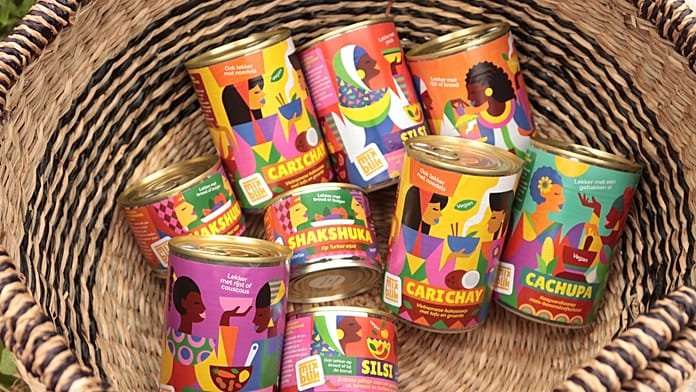
Mixblik’s broad selection of vegetarian and vegan dishes, ranging from Senegalese Mafé to Cape Verdean Cachupa and Vietnamese Cà Ri Chay, reflects the global community it has fostered, representing women from Somalia, Eritrea, Vietnam, Ukraine, Syria, Congo, Saudi Arabia, Senegal and Morocco.
A tight-knit global community
“We are very community-based,” van der Hoeven said. “What you see is that if there is one woman sick, then everyone starts cooking and bringing meals to her home, making sure the house is clean before they leave.”
“It’s not just the ladies who are here in our programme,” she added, “we also work with a lot of volunteers who help support them, for example by going with them to the hospital or to the family doctor, to make sure that they can fully understand what’s going on.”
The strong bond between the women is evident not only in their close teamwork, but also in their cosy lunches and coffee breaks.
“We usually phone each other outside of work when we’re at home,” one of the women in the educational programme told Euronews during a coffee break with her friend.
“We started here together four months ago, and we always support each other. We talk about our problems, we laugh together.”
Most women stay at Mixblik for around a year. After receiving the necessary food industry certifications, the organisation assists them in finding a job and taking the next steps in their careers.
The meals in colourful cans are not just eye-catching to look at, the choice of packaging is intentional. The can was deliberately chosen for its recyclable nature and its canning process is carried out with care, ensuring that the meals are kept fresh while maintaining a long shelf life.
While the meals are easy to prepare, Mixblik places strong emphasis on their healthiness, sourcing only organic, local ingredients from farmers near Rotterdam.
“For us, it’s important to be good to the women and people around us, but also to our planet,” van der Hoeven concluded.