



Denmark to expel non-Danish citizens if jailed for at least one year for serious crimes
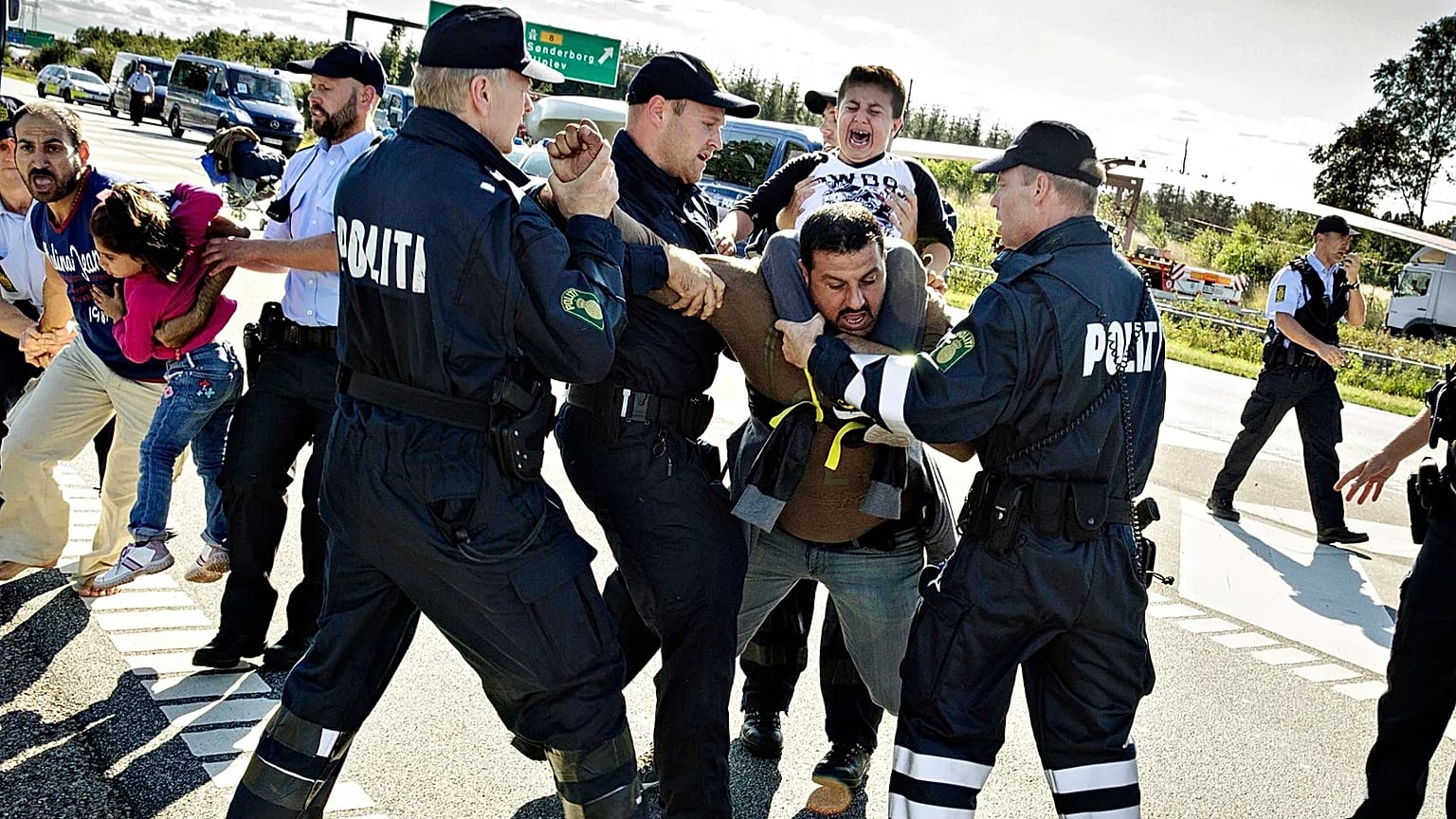
Police grab a refugee as hundreds of refugees walk in Southern Jutland motorway near Padborg, 9 September, 2015
–
Copyright
AP Photo
30/01/2026 – 17:24 GMT+1
Prime Minister Mette Frederiksen acknowledged the government was acting “unconventionally” by not waiting for court decisions in deportation cases.
Denmark will expel non-Danish citizens who have served prison terms of a year or more for serious crimes, part of new measures to tighten immigration policy, the government announced ON Friday.
“Foreign offenders sentenced to at least one year in prison for serious crimes, such as aggravated assault and rape, should, in principle, be expelled,” the immigration ministry said in a statement.
Under current regulations, expulsions are not automatic, as Denmark complies with international conventions protecting the right to private and family life and forbidding inhumane treatment.
The Scandinavian country has, together with the UK, recently called on Europe to reform the European Convention on Human Rights (ECHR), which safeguards fundamental freedoms.
“It is right and necessary for European countries to sit around a table and say that we prefer to protect our countries rather than protect offenders,” Prime Minister Mette Frederiksen told journalists.
“When international rules were drafted, I don’t think anyone imagined that someone would flee the Middle East to come to the best country in the world and start raping girls and women.”
“At the time, it was absolutely not imagined that the victim would become the perpetrator. And I can assure you that, unfortunately, many of them have,” she added.
In May last year, Frederiksen and Italian Prime Minister Giorgia Meloni, along with nine other European leaders, signed an open letter calling for a reinterpretation of the European Convention on Human Rights.
According to statistics from the immigration ministry, around 70% of foreign nationals sentenced to prison terms of one year or more for serious crimes have been expelled.
In addition, the government, which insisted that “refugees must be in Denmark on a temporary basis,” plans to boost incentives for voluntary returns and to tighten rules for foreigners in departure centres.
Frederiksen’s government has pursued a “zero refugee” policy since coming to power in 2019.
Last year marked a historic low in asylum admissions for the Scandinavian country. According to the government, 839 requests were granted by the end of November.
It was only the fourth time that fewer than 1,000 claims were accepted since 1983.
The Danish announcement comes as the EU unveiled a new five-year strategy on migration. The bloc wants to reinforce partnerships with third countries to ensure the return of nationals and reduce irregular migration to Europe.